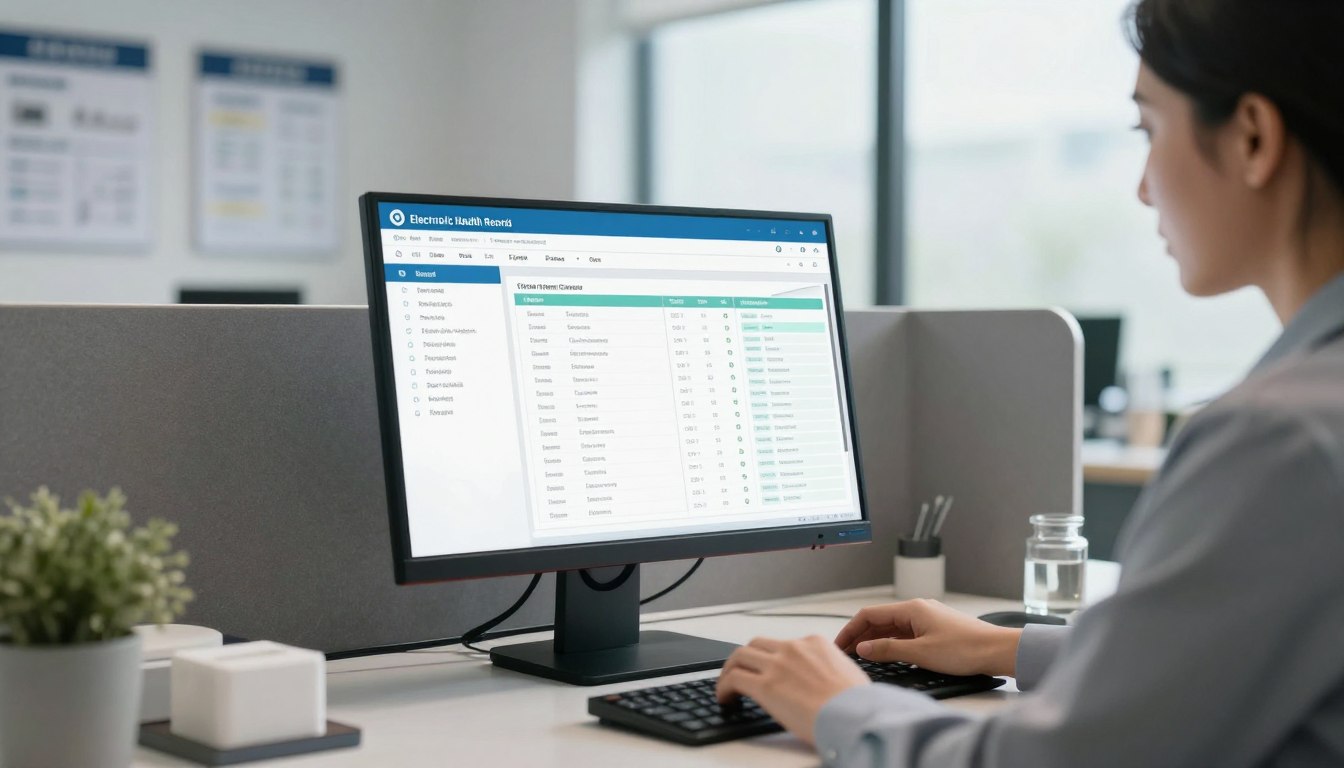
As Hippocrates once wisely noted, “Wherever the art of medicine is loved, there is also a love of humanity.” Today, that love is best expressed through the efficiency of modern technology. By adopting digital systems, clinics can focus more on people and less on paperwork.
Electronic Health Records serve as the backbone of a modern medical practice. These tools simplify healthcare data management, ensuring that vital information is always at your fingertips when a patient needs it most.
Transitioning to these systems helps reduce errors and improves overall clinical outcomes. When doctors have instant access to history, they make better decisions. This shift creates a smoother experience for both the provider and the individual seeking care.
Key Takeaways
- Digital systems significantly reduce administrative burdens for medical staff.
- Improved data accuracy leads to safer and more effective treatment plans.
- Centralized information allows for seamless coordination between different specialists.
- Patients benefit from faster access to their own medical history and test results.
- Modernizing your workflow is essential for long-term success in the medical field.
The Evolution of Modern Healthcare Data Management
The way healthcare data is managed has undergone a radical shift, moving from traditional methods to sophisticated digital ecosystems. This transformation has been driven by the need for more efficient, accurate, and secure management of patient information.
From Paper Charts to Digital Ecosystems
The traditional paper-based system for managing medical records has several limitations, including the potential for data loss, misfiling, and inaccessibility. In contrast, digital ecosystems offer a more robust and reliable solution.
Key benefits of digital ecosystems include:
- Enhanced data accessibility and sharing
- Improved data security and integrity
- Better coordination of care among healthcare providers
The Role of Health Information Technology in Patient Safety
Health Information Technology (HIT) plays a crucial role in enhancing patient safety by reducing errors and improving the quality of care. HIT systems enable healthcare providers to access patient information accurately and efficiently.
Some of the ways HIT improves patient safety include:
- Automated alerts for potential medication interactions
- Real-time access to patient medical history
- Enhanced clinical decision support systems
By leveraging these technologies, healthcare providers can significantly reduce the risk of medical errors and improve patient outcomes.
Core Benefits of Implementing Electronic Health Records
The adoption of Electronic Health Records (EHRs) marks a significant shift in modern healthcare, offering numerous benefits that enhance patient care and clinical workflows. By transitioning from traditional paper-based records to digital systems, healthcare providers can leverage advanced technology to improve the quality and efficiency of care.
Improving Diagnostic Accuracy and Speed
EHRs significantly enhance diagnostic accuracy and speed by providing healthcare professionals with immediate access to comprehensive patient data. This includes medical history, laboratory results, and imaging studies, all of which are crucial for making informed decisions.
Key Features Enhancing Diagnostic Accuracy:
- Real-time access to patient data
- Integration with diagnostic imaging and laboratory results
- Clinical decision support systems (CDSS) that provide evidence-based recommendations
Reducing Medication Errors Through Automated Alerts
One of the significant advantages of EHRs is their ability to reduce medication errors through automated alerts and reminders. These systems can notify healthcare providers about potential drug interactions, allergic reactions, and dosing errors, thereby enhancing patient safety.
| Feature | Description | Benefit |
|---|---|---|
| Automated Alerts | Real-time notifications for potential medication errors | Reduces risk of adverse drug reactions |
| Clinical Decision Support | Evidence-based guidelines for medication management | Improves medication safety and efficacy |
| Medication History | Comprehensive record of patient medication history | Enhances informed decision-making |
By implementing EHRs, healthcare facilities can significantly improve diagnostic accuracy, reduce medication errors, and enhance overall patient care. The integration of these systems is a critical step towards achieving more efficient and effective healthcare delivery.
Key Features to Look for in EHR Software
When selecting EHR software, it’s crucial to consider several key features that can significantly impact the efficiency and effectiveness of your healthcare practice. The right EHR system can streamline clinical workflows, improve patient care, and reduce administrative burdens.
Interoperability and Data Exchange Capabilities
Interoperability is a critical feature of EHR software, enabling seamless data exchange between different healthcare providers and systems. This capability ensures that patient information is accessible and up-to-date across various care settings.
EHR systems with robust interoperability features can facilitate better care coordination, reduce medical errors, and enhance patient outcomes. Look for EHR software that supports standardized data exchange protocols, such as HL7 and FHIR, to ensure compatibility with other healthcare systems.
User-Friendly Interfaces for Clinical Staff
A user-friendly interface is essential for EHR adoption and effective use among clinical staff. An intuitive design can minimize training requirements, reduce errors, and increase user satisfaction.
When evaluating EHR software, consider the layout, navigation, and overall usability. The system should allow clinicians to quickly access patient information, document care, and manage orders without unnecessary complexity.
Customizable Templates for Specialty Practices
Customizable templates are vital for specialty practices that require tailored documentation and workflow support. EHR software with flexible templating capabilities can help practices adapt the system to their specific needs.
By using customizable templates, healthcare providers can streamline documentation, improve data capture, and enhance the overall efficiency of their clinical workflows. This feature is particularly important for specialty practices with unique documentation requirements.
Navigating the EHR Implementation Process
Navigating the complexities of EHR implementation requires a comprehensive approach that includes assessing practice needs, choosing the right technology, and training staff. As healthcare facilities embark on this journey, understanding the intricacies of the process is crucial for success.
Assessing Your Practice Needs and Infrastructure
Before diving into EHR implementation, it’s essential to conduct a thorough assessment of your practice’s needs and existing infrastructure. This involves evaluating your current workflow, identifying areas for improvement, and determining the specific features and functionalities required from an EHR system. A well-planned needs assessment lays the groundwork for a successful EHR implementation.
Consider factors such as the size of your practice, the number of users, and the specialty or specialties served. It’s also crucial to assess your IT infrastructure to ensure it can support the demands of an EHR system.
Selecting the Right Vendor for Your Facility
Choosing the right EHR vendor is a critical decision that can significantly impact the success of your implementation. It’s not just about the technology; it’s about finding a partner that understands your practice’s unique needs. When evaluating vendors, consider their experience in your specialty, the comprehensiveness of their EHR system, and their customer support offerings.
“The right EHR vendor can make all the difference in the success of your implementation. Look for a partner that not only provides robust technology but also understands the nuances of your practice.”
A thorough vendor selection process involves comparing different EHR systems, assessing their interoperability, and reviewing case studies or testimonials from other healthcare facilities.
Managing Data Migration and Staff Training
Once you’ve selected an EHR system, the next critical steps are data migration and staff training. Effective data migration ensures that patient records are accurately transferred to the new system, while comprehensive staff training is vital for user adoption and minimizing disruptions to your practice.
- Develop a detailed data migration plan to ensure accuracy and completeness.
- Provide ongoing training and support to staff to address any questions or concerns.
- Monitor the implementation process closely to identify and resolve any issues promptly.
By carefully managing these aspects, healthcare facilities can navigate the EHR implementation process more smoothly, ultimately enhancing patient care and operational efficiency.
Enhancing Patient Engagement Through Digital Portals
Digital portals have revolutionized the way patients interact with healthcare providers, enhancing overall patient engagement. These portals are a crucial component of modern healthcare, enabling patients to access their medical records and communicate with healthcare providers more effectively.
The use of digital portals in conjunction with electronic health records (EHRs) has been shown to improve patient outcomes by facilitating a more active role in their care. By providing patients with secure access to their medical information, digital portals promote transparency and empowerment.
Empowering Patients with Access to Their Medical Records
One of the primary benefits of digital portals is that they allow patients to access their medical records online. This access enables patients to view their medical history, including diagnoses, medications, and test results, at their convenience.
By having access to their medical records, patients are better equipped to manage their health. They can track their progress, identify potential issues early, and make informed decisions about their care.
Streamlining Appointment Scheduling and Communication
Digital portals also streamline appointment scheduling and communication between patients and healthcare providers. Patients can request appointments, send messages to their providers, and receive important updates about their care through the portal.
This streamlined communication helps reduce the administrative burden on healthcare staff, allowing them to focus on providing high-quality patient care. Additionally, it improves patient satisfaction by providing a convenient and efficient way to manage their healthcare needs.
Overall, the integration of digital portals with EHRs is a powerful tool for enhancing patient engagement. By empowering patients with access to their medical records and streamlining communication, digital portals can significantly improve patient outcomes and satisfaction.
Optimizing Workflow Efficiency with EMR Systems
Optimizing workflow efficiency is crucial for healthcare facilities, and EMR systems are at the forefront of this endeavor. By streamlining clinical and administrative processes, EMR systems enable healthcare providers to deliver high-quality patient care while reducing operational costs.
Streamlining Clinical Workflows is a key benefit of EMR systems. These systems automate many routine tasks, allowing clinical staff to focus on more complex and high-value tasks. For instance, EMR systems can automate patient data collection, reducing the need for manual entry and minimizing the risk of errors.
Automating Administrative Tasks and Billing
One of the significant advantages of EMR systems is their ability to automate administrative tasks, including billing and insurance claims processing. By automating these tasks, healthcare facilities can reduce the administrative burden on staff, decrease the likelihood of billing errors, and improve revenue cycle management.
Automated billing systems within EMR software can also help practices stay compliant with changing regulatory requirements, such as those related to HIPAA and the Merit-based Incentive Payment System (MIPS).
Reducing Documentation Time for Physicians
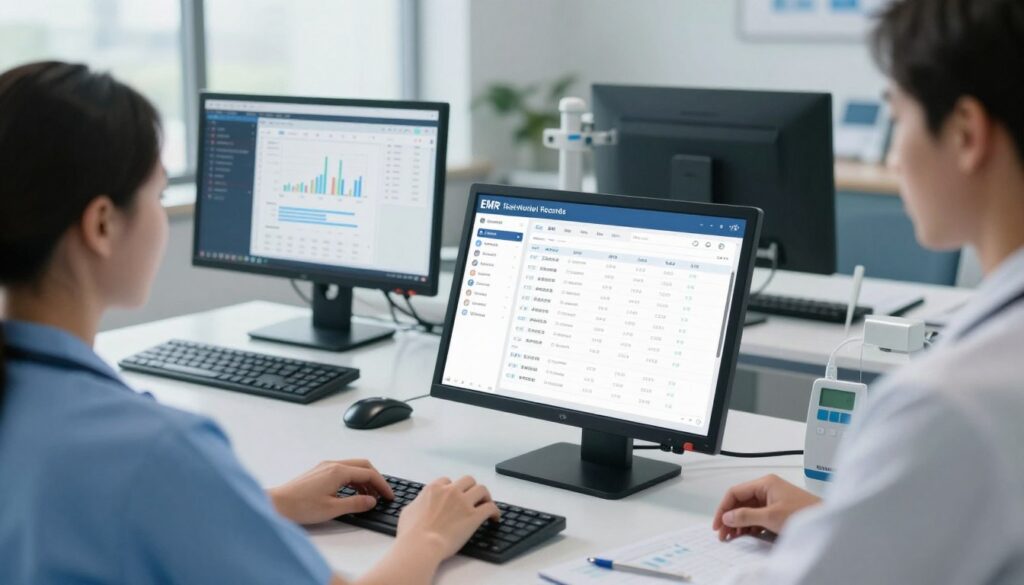
Physician documentation is a critical component of healthcare delivery, but it can be time-consuming and take away from patient care. EMR systems are designed to reduce documentation time through features like template-based charting, voice-to-text functionality, and streamlined clinical documentation.
By reducing the time spent on documentation, physicians can focus more on patient care, improving the overall quality of care and patient satisfaction. Additionally, reduced documentation time can lead to increased productivity and better work-life balance for healthcare professionals.
Ensuring Data Security and HIPAA Compliance
The shift towards digital healthcare has brought numerous benefits, but it also raises significant concerns regarding the security and privacy of patient information. As healthcare organizations increasingly rely on electronic health records (EHRs) and other digital solutions, the need to protect sensitive data from cyber threats has become more pressing than ever.
Protecting patient data is not only a matter of compliance with regulations like HIPAA but also a critical component of maintaining patient trust. Healthcare providers must implement robust security measures to safeguard against data breaches and unauthorized access.
Protecting Sensitive Patient Information from Cyber Threats
Cyber threats to healthcare data are becoming increasingly sophisticated, ranging from ransomware attacks to phishing schemes. To counter these threats, healthcare organizations must adopt a multi-layered approach to security, including:
- Encryption of data both in transit and at rest to prevent unauthorized access.
- Regular software updates and patching to fix vulnerabilities.
- Employee training to recognize and respond to potential security threats.
- Advanced threat detection systems to identify and mitigate potential breaches.
Best Practices for Access Control and Audit Trails
Controlling who has access to patient data is crucial for maintaining its confidentiality and integrity. Best practices include:
- Implementing role-based access control to limit access to authorized personnel.
- Using multi-factor authentication to verify user identities.
- Maintaining detailed audit trails to track access and changes to patient data.
- Regularly reviewing access logs to detect and respond to potential security incidents.
By adopting these measures, healthcare organizations can significantly enhance the security of their EHR systems and maintain compliance with HIPAA regulations, thereby protecting sensitive patient information from cyber threats.
Overcoming Common Challenges in EHR Adoption
Implementing Electronic Health Records (EHRs) can be a complex process, fraught with challenges that healthcare providers must navigate. Effective EHR adoption requires a comprehensive understanding of the potential obstacles and strategies to overcome them.
The transition to EHRs can be daunting, especially for healthcare providers who are accustomed to traditional paper-based systems. However, with careful planning and execution, many of the common challenges associated with EHR adoption can be mitigated.
Addressing Physician Burnout and Alert Fatigue
One of the significant challenges associated with EHR adoption is physician burnout, which can be exacerbated by the increased documentation requirements and alert fatigue. Alert fatigue occurs when clinicians become desensitized to the numerous alerts generated by EHR systems, potentially leading to critical alerts being overlooked.
To address these issues, healthcare organizations can implement several strategies. For instance, they can customize EHR systems to reduce unnecessary alerts and streamline documentation processes. Additionally, providing comprehensive training to clinical staff can help them navigate EHR systems more efficiently, reducing the burden of documentation and minimizing the risk of burnout.
Managing Costs and Return on Investment
Another significant challenge associated with EHR adoption is managing the costs and evaluating the return on investment (ROI). The initial investment in EHR systems can be substantial, and healthcare organizations must carefully consider the costs and benefits.
To manage costs effectively, healthcare organizations should conduct thorough cost-benefit analyses and develop comprehensive implementation plans. They should also explore potential funding opportunities, such as government incentives, to offset the costs of EHR adoption. By doing so, healthcare organizations can maximize their ROI and ensure that their EHR systems deliver long-term value.
By understanding the common challenges associated with EHR adoption and implementing strategies to overcome them, healthcare organizations can ensure a successful transition to digital records management and improve the quality of patient care.
The Future of Electronic Health Records and AI
The future of healthcare is being shaped by the convergence of Electronic Health Records (EHRs) and Artificial Intelligence (AI). This integration is poised to revolutionize the way healthcare is delivered and managed.
As EHRs continue to become more prevalent, the incorporation of AI technologies is enhancing their capabilities, enabling healthcare providers to offer more personalized and proactive care. The potential of AI in EHRs lies in its ability to analyze vast amounts of data quickly and accurately, identifying patterns that may not be apparent to human clinicians.
Predictive Analytics for Proactive Care
One of the key applications of AI in EHRs is predictive analytics. By analyzing historical data and real-time patient information, predictive analytics can help identify patients at risk of developing certain conditions or complications. This enables healthcare providers to intervene early, potentially preventing adverse outcomes.
For instance, predictive analytics can be used to identify patients with a high risk of readmission after discharge. By targeting these patients with appropriate interventions, healthcare providers can reduce the likelihood of readmission and improve patient outcomes.
| Predictive Analytics Application | Description | Benefit |
|---|---|---|
| Risk Stratification | Identifying patients at high risk of certain outcomes | Targeted interventions to prevent complications |
| Personalized Medicine | Tailoring treatment plans to individual patient characteristics | Improved patient outcomes through personalized care |
| Population Health Management | Analyzing data to identify trends and patterns in patient populations | Informing public health initiatives and resource allocation |
Integrating Artificial Intelligence into Clinical Decision Support
AI is also being integrated into Clinical Decision Support Systems (CDSSs) within EHRs. CDSSs provide healthcare providers with clinical decision-making support, such as alerts and recommendations, based on patient data and clinical guidelines.
The incorporation of AI into CDSSs enhances their capabilities, enabling them to provide more sophisticated and contextually relevant support. For example, AI-powered CDSSs can analyze patient data and medical literature to provide healthcare providers with real-time guidance on diagnosis and treatment options.
“The integration of AI into EHRs has the potential to revolutionize healthcare by providing healthcare providers with the insights and tools they need to deliver high-quality, patient-centered care.”
As AI continues to evolve and improve, its integration with EHRs is likely to have a profound impact on the future of healthcare. By leveraging the strengths of both technologies, healthcare providers can improve patient outcomes, reduce costs, and enhance the overall quality of care.
Standardizing Medical Records Management Across Networks
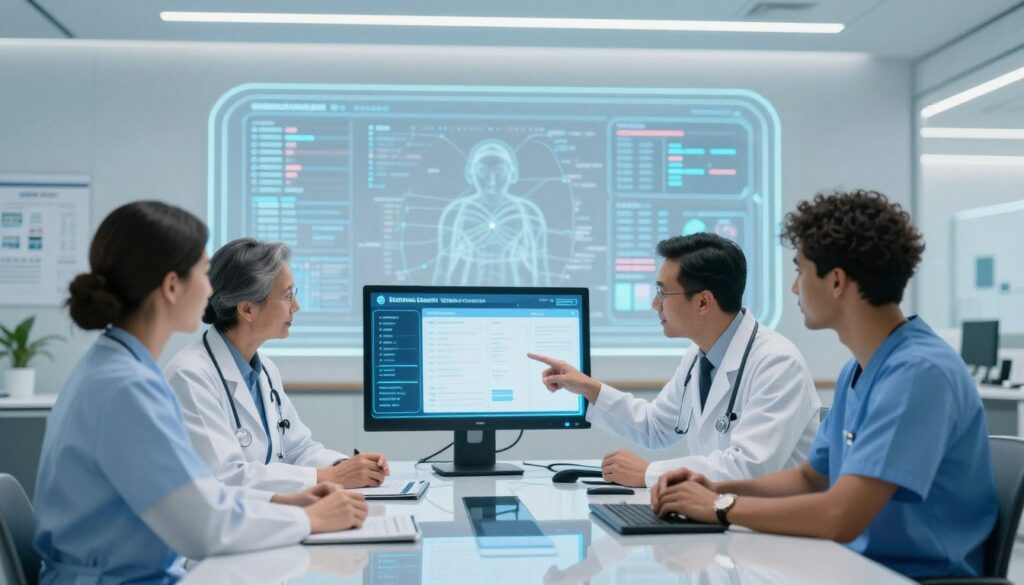
As healthcare becomes increasingly interconnected, standardizing medical records management is vital. This standardization is the backbone of effective healthcare data management, enabling different healthcare providers to access and share patient information seamlessly.
The Importance of Unified Data Standards
Unified data standards are crucial for ensuring that medical records are consistent and easily accessible across different healthcare networks. Standardized data formats facilitate the sharing of patient information, reducing errors and improving care coordination.
The adoption of unified data standards also enhances the ability to analyze healthcare data, providing insights that can inform treatment decisions and policy development.
| Benefits of Unified Data Standards | Description | Impact on Healthcare |
|---|---|---|
| Improved Data Consistency | Standardized formats for data entry | Reduces errors in patient care |
| Enhanced Data Sharing | Facilitates access across networks | Improves care coordination |
| Better Data Analysis | Consistent data for analysis | Informs treatment decisions and policy |
Facilitating Care Coordination Between Specialists
Standardized medical records management plays a pivotal role in facilitating care coordination between specialists. By ensuring that all healthcare providers have access to the same accurate and up-to-date patient information, care coordination is significantly improved.
This not only enhances patient outcomes but also reduces the likelihood of medical errors, thereby improving the overall quality of care.
Measuring Success in Your Healthcare Facility
Assessing the effectiveness of EHR software is crucial for healthcare facilities aiming to improve patient care. To achieve this, it’s essential to track specific metrics and gather insights from both clinical and administrative staff.
The implementation of electronic medical records is a significant investment for any healthcare facility. Therefore, evaluating its success is vital to justify the investment and identify areas for improvement.
Key Performance Indicators for EHR Utilization
To measure the success of EHR implementation, healthcare facilities should monitor key performance indicators (KPIs) such as:
- Reduction in documentation time for physicians
- Improvement in diagnostic accuracy
- Enhanced patient engagement through digital portals
- Streamlining of administrative tasks and billing processes
By tracking these KPIs, facilities can understand the impact of their EHR software on operational efficiency and patient care.
Gathering Feedback from Clinical and Administrative Staff
Gathering feedback from both clinical and administrative staff is crucial for understanding the real-world impact of EHR systems. This can be achieved through surveys, focus groups, or one-on-one interviews.
Staff feedback can highlight issues such as user experience, system usability, and the effectiveness of training programs. It can also provide insights into how the EHR system is influencing their workflow and patient interaction.
By combining KPI data with staff feedback, healthcare facilities can gain a comprehensive understanding of their EHR system’s performance and identify opportunities for further improvement.
Conclusion
As healthcare continues to evolve, Electronic Health Records have become a cornerstone of modern healthcare data management. By streamlining patient care, improving diagnostic accuracy, and enhancing patient engagement, EHRs have transformed the way healthcare providers operate.
The benefits of EHRs are multifaceted, from reducing medication errors to optimizing workflow efficiency. As the healthcare industry continues to adopt new technologies, the role of EHRs will only continue to grow.
Effective healthcare data management is crucial for delivering high-quality patient care. By leveraging EHRs and other digital tools, healthcare providers can improve patient outcomes, reduce costs, and enhance the overall care experience.
As we look to the future, it’s clear that Electronic Health Records will remain a vital component of the healthcare landscape, driving innovation and improvement in patient care.