
Voltaire once wisely noted, “The art of medicine consists of amusing the patient while nature cures the disease.” Today, this sentiment rings truer than ever as the medical field shifts its focus toward the individual journey of every person seeking help.
Modern healthcare quality improvement initiatives are transforming how providers interact with their communities. At the heart of this evolution is the accountable care organization, a model designed to foster collaboration and transparency.
These groups prioritize your well-being by coordinating services across different specialists and facilities. By streamlining communication, they ensure that you receive the right support at the right time. This proactive approach not only reduces stress for families but also leads to better long-term health outcomes for everyone involved.
Key Takeaways
- ACOs prioritize a patient-centered approach to medical services.
- Coordinated efforts reduce gaps in communication between specialists.
- Focusing on quality metrics leads to better overall health results.
- These models encourage providers to work as a unified team.
- Patients benefit from a more seamless and efficient medical journey.
Understanding the Accountable Care Organization Model
The Accountable Care Organization (ACO) model represents a significant shift in healthcare delivery, focusing on quality and cost-effectiveness. ACOs are designed to improve patient outcomes while reducing healthcare expenditures through coordinated care.
The ACO model is built around the idea of value-based care, where healthcare providers are incentivized to deliver high-quality, cost-effective care. This approach contrasts with traditional fee-for-service models, where providers are paid for each service they deliver, regardless of the outcome.
Defining the ACO Framework
The ACO framework is characterized by several key elements, including a focus on patient-centered care, care coordination, and data-driven decision-making. ACOs typically involve a network of healthcare providers, including primary care physicians, specialists, and hospitals, working together to deliver comprehensive care.
The following table highlights the core components of the ACO framework:
| Component | Description | Benefits |
|---|---|---|
| Patient-Centered Care | Care tailored to individual patient needs | Improved patient satisfaction, better health outcomes |
| Care Coordination | Coordination among healthcare providers | Reduced hospital readmissions, improved care transitions |
| Data-Driven Decision-Making | Use of data analytics to inform care decisions | Improved quality of care, reduced costs |
The Shift Toward Value-Based Care
The shift toward value-based care is a key aspect of the ACO model. This approach incentivizes healthcare providers to deliver high-quality, cost-effective care by tying payment to performance metrics.
Value-based care models, such as those used in ACOs, have been shown to improve patient outcomes while reducing healthcare costs. By focusing on preventive care, care coordination, and data-driven decision-making, ACOs can deliver better care at a lower cost.
The Core Philosophy of Patient-Centered Care
The shift towards patient-centered care within ACOs marks a significant evolution in healthcare, focusing on the individual’s unique requirements and preferences. This approach is fundamental in improving patient outcomes and enhancing overall satisfaction with care.
Prioritizing Patient Needs and Preferences
ACOs prioritize patient needs by implementing care plans that are tailored to the individual. This involves understanding the patient’s health goals, preferences, and values. By doing so, healthcare providers can deliver care that is not only effective but also respectful and responsive to individual patient needs.
Care coordination is a critical aspect of patient-centered care. ACOs achieve this by ensuring that all healthcare providers are informed and aligned with the patient’s care plan. This care coordination helps in reducing errors, improving the quality of care, and enhancing patient safety.
Moving Beyond Fee-for-Service Limitations
Traditional fee-for-service models often focus on the volume of care provided rather than the value. ACOs, on the other hand, are designed to move beyond these limitations by incentivizing high-quality, cost-effective care. This shift encourages healthcare providers to focus on preventive care, manage chronic conditions more effectively, and reduce unnecessary hospitalizations.
| Aspect | Fee-for-Service | Patient-Centered Care in ACOs |
|---|---|---|
| Focus | Volume of care | Quality and value of care |
| Payment Structure | Payment per service | Incentives for quality and cost-effectiveness |
| Care Approach | Fragmented care | Coordinated care |
By adopting a patient-centered approach and moving beyond the limitations of traditional fee-for-service models, ACOs are poised to significantly improve patient outcomes and reduce healthcare costs. This approach not only benefits patients but also contributes to a more sustainable healthcare system.
How ACOs Enhance Care Coordination
ACOs play a pivotal role in enhancing care coordination among healthcare providers. By fostering a collaborative environment, ACOs ensure that patients receive comprehensive and continuous care.
The fragmentation of healthcare services is a significant challenge in the current healthcare system. ACOs address this issue by promoting coordination among different healthcare providers. This coordination is crucial for improving healthcare quality improvement.
Breaking Down Silos Between Specialists and Primary Care
One of the primary ways ACOs enhance care coordination is by breaking down silos between specialists and primary care physicians. Traditionally, specialists and primary care providers have operated in isolation, leading to gaps in patient care. ACOs facilitate communication and collaboration between these providers, ensuring that patients receive seamless and comprehensive care.
For instance, when a patient is referred to a specialist, the ACO ensures that the specialist has access to the patient’s complete medical history. This facilitates informed decision-making and reduces the likelihood of medical errors.
Utilizing Electronic Health Records for Seamless Transitions
ACOs also utilize Electronic Health Records (EHRs) to facilitate seamless transitions between different healthcare providers. EHRs provide a centralized platform for storing and accessing patient data, enabling healthcare providers to coordinate care more effectively.
By leveraging EHRs, ACOs can ensure that patient information is up-to-date and accessible to all relevant healthcare providers. This reduces the risk of medical errors and improves the overall quality of care.
In conclusion, ACOs enhance care coordination by breaking down silos between specialists and primary care physicians and utilizing EHRs for seamless transitions. This leads to improved patient outcomes and healthcare quality improvement.
The Role of Population Health Management
Population health management plays a vital role in the success of ACOs by focusing on preventive care and early intervention. This approach enables healthcare providers to better manage the health of their patient populations, improving overall outcomes and reducing costs.
Identifying High-Risk Patient Groups
ACOs use data analytics and risk stratification tools to identify patients who are at high risk of hospitalization or other adverse health events. By understanding the specific needs and challenges of these patient groups, ACOs can tailor their interventions to provide targeted support.
ACOs utilize various data sources, including electronic health records (EHRs), claims data, and patient surveys, to identify high-risk patients. This information helps in developing personalized care plans that address the unique needs of each patient.
Proactive Outreach and Preventive Screenings
Proactive outreach and preventive screenings are critical components of population health management within ACOs. By reaching out to patients proactively, healthcare providers can identify potential health issues before they become severe.
Preventive screenings, such as mammograms and colonoscopies, are essential for early detection and treatment of diseases. ACOs encourage patients to undergo these screenings through patient education and outreach programs.
The benefits of effective population health management are multifaceted. Not only does it improve patient outcomes, but it also helps in reducing healthcare costs by minimizing unnecessary hospitalizations and procedures.
| Benefits | Description |
|---|---|
| Improved Patient Outcomes | Early intervention and preventive care lead to better health outcomes. |
| Reduced Healthcare Costs | Minimizing unnecessary hospitalizations and procedures reduces costs. |
| Enhanced Patient Engagement | Patient education and outreach programs increase patient engagement. |
Financial Incentives and the Medicare Shared Savings Program
Financial incentives play a crucial role in the success of Accountable Care Organizations, primarily through programs like the Medicare Shared Savings Program. This program is designed to promote high-quality, cost-effective care by aligning financial incentives with patient outcomes.
The Medicare Shared Savings Program allows Accountable Care Organizations to share in the savings they generate for the Medicare program, provided they meet specific quality and cost benchmarks. This arrangement encourages ACOs to deliver efficient, high-quality care.
Aligning Provider Goals with Patient Outcomes
One of the primary objectives of the Medicare Shared Savings Program is to align the goals of healthcare providers with the outcomes of their patients. By doing so, it ensures that providers are incentivized to deliver care that is not only cost-effective but also of high quality.
This alignment is achieved through a combination of financial incentives and quality metrics. Providers are rewarded for achieving certain quality benchmarks, which are designed to reflect the overall health and well-being of their patients.
Understanding Shared Savings and Losses
The Medicare Shared Savings Program operates on a simple principle: Accountable Care Organizations that deliver high-quality, cost-effective care are eligible to share in the savings they generate. Conversely, ACOs that fail to meet the required benchmarks may be subject to losses.
The shared savings are calculated based on the difference between the ACO’s actual expenditures and a predetermined benchmark. This benchmark is set by Medicare and takes into account various factors, including the ACO’s historical spending patterns and regional healthcare costs.
Key aspects of shared savings and losses include:
- Benchmarking: Establishing a spending benchmark against which an ACO’s performance is measured.
- Quality metrics: Assessing the quality of care delivered by the ACO to ensure it meets required standards.
- Shared savings: Distributing a portion of the savings to the ACO if it achieves the required benchmarks.
- Shared losses: Requiring the ACO to share in losses if it fails to meet the benchmarks, in certain models.
Measuring Success Through Quality Metrics
Measuring success through quality metrics is a cornerstone of the Accountable Care Organization model. This approach enables ACOs to assess their performance comprehensively and make informed decisions to improve patient care.
Key Performance Indicators in Modern Healthcare
ACOs utilize various key performance indicators (KPIs) to evaluate their success in delivering high-quality, patient-centered care. These KPIs encompass a range of metrics, including patient satisfaction scores, hospital readmission rates, and the effective management of chronic conditions.
The use of KPIs allows ACOs to identify areas for improvement and implement targeted interventions. For instance, if an ACO notices a high rate of hospital readmissions, it can develop strategies to enhance post-discharge care and reduce the likelihood of readmission.

| KPI | Description | Significance |
|---|---|---|
| Patient Satisfaction Scores | Measures patient experience through surveys and feedback | Reflects the quality of care and patient engagement |
| Hospital Readmission Rates | Tracks the percentage of patients readmitted within a certain timeframe | Indicates the effectiveness of post-discharge care |
| Chronic Condition Management | Assesses the control and management of chronic diseases | Impacts long-term health outcomes and healthcare costs |
Reporting Requirements and Transparency
ACOs are required to report their quality metrics to regulatory bodies, such as the Centers for Medicare & Medicaid Services (CMS). This reporting is crucial for ensuring transparency and accountability within the healthcare system.
By making quality metrics publicly available, ACOs can demonstrate their commitment to delivering high-quality care. This transparency also facilitates comparisons between different ACOs, driving competition and continuous improvement in healthcare delivery.
Empowering Patients Through Shared Decision-Making
Patient empowerment through shared decision-making is a key strategy used by Accountable Care Organizations (ACOs) to drive value-based care. By actively involving patients in their healthcare decisions, ACOs can improve patient outcomes and enhance the overall quality of care.
The process of shared decision-making involves collaboration between patients, healthcare providers, and sometimes family members or caregivers. This collaborative approach ensures that patients’ preferences, values, and needs are taken into account when making healthcare decisions.
Involving Patients in Their Own Care Plans
Involving patients in their own care plans is crucial for achieving better health outcomes. When patients are actively engaged in their care, they are more likely to adhere to treatment plans and make informed decisions about their health.
ACOs facilitate this by providing patients with access to their health information, encouraging open communication with healthcare providers, and supporting patient education initiatives.
Improving Health Literacy and Engagement
Improving health literacy is essential for enhancing patient engagement. Health literacy refers to the ability of individuals to gain access to, understand, and use information in ways that promote and maintain good health.
ACOs work to improve health literacy by providing clear, understandable health information and supporting programs that educate patients about their health conditions and treatment options.
- Clear communication of health information
- Patient education programs
- Support for informed decision-making
By empowering patients through shared decision-making, ACOs can drive value-based care and achieve better patient outcomes. This approach not only improves the quality of care but also enhances patient satisfaction and engagement.
Overcoming Challenges in ACO Implementation
Effective ACO implementation hinges on overcoming key challenges, including the integration of disparate data systems and changing the culture within healthcare organizations.
Navigating Data Interoperability Hurdles
Data interoperability is a significant challenge for ACOs. It involves the ability of different information systems, devices, and applications to access, exchange, and cooperatively use data in a coordinated manner.
To overcome data interoperability hurdles, ACOs can implement several strategies:
- Implement standardized data exchange protocols.
- Invest in advanced health information technology (HIT) infrastructure.
- Foster collaboration among healthcare providers to ensure seamless data sharing.
Managing Cultural Shifts Within Medical Practices
Cultural shifts within medical practices are equally crucial. ACOs require a culture that prioritizes patient-centered care, teamwork, and continuous quality improvement.
Strategies to manage these cultural shifts include:
- Leadership Commitment: Strong leadership is essential for driving cultural change.
- Staff Engagement: Engaging staff in the change process can foster a sense of ownership and commitment.
- Training and Development: Providing ongoing training and development opportunities helps staff adapt to new practices and technologies.
By addressing these challenges, ACOs can improve their effectiveness in delivering high-quality, patient-centered care.
The Impact of ACOs on Healthcare Savings
By fostering a culture of coordination and preventive care, ACOs are making substantial strides in reducing healthcare expenditures. This is achieved through various strategies that focus on improving patient outcomes while minimizing unnecessary costs.
The core of ACOs’ cost-saving potential lies in their ability to reduce unnecessary hospital readmissions and optimize resource utilization. By ensuring that patients receive appropriate care at the right time, ACOs can significantly lower the likelihood of complications that lead to hospital readmissions.
Reducing Unnecessary Hospital Readmissions
One of the key strategies employed by ACOs to reduce healthcare costs is the implementation of effective care transition programs. These programs ensure that patients are well-supported during their transition from hospital to home or other care settings, thereby reducing the risk of readmission.
Care coordination plays a vital role in this process, as it involves the systematic organization of patient care activities and information across different healthcare providers. By leveraging electronic health records (EHRs) and other digital tools, ACOs can facilitate seamless transitions and ensure that all relevant parties are informed about a patient’s care plan.
| Strategy | Description | Impact on Readmissions |
|---|---|---|
| Care Transition Programs | Programs designed to support patients during transitions between care settings. | Reduced risk of readmission through better support and planning. |
| Care Coordination | Systematic organization of patient care activities and information. | Improved continuity of care, reducing gaps that can lead to readmission. |
| Utilization of EHRs | Leveraging electronic health records for better information sharing. | Enhanced care coordination and reduced errors. |
Optimizing Resource Utilization
ACOs also focus on optimizing resource utilization to achieve healthcare savings. This involves analyzing data on healthcare usage patterns to identify areas where resources can be more efficiently allocated.
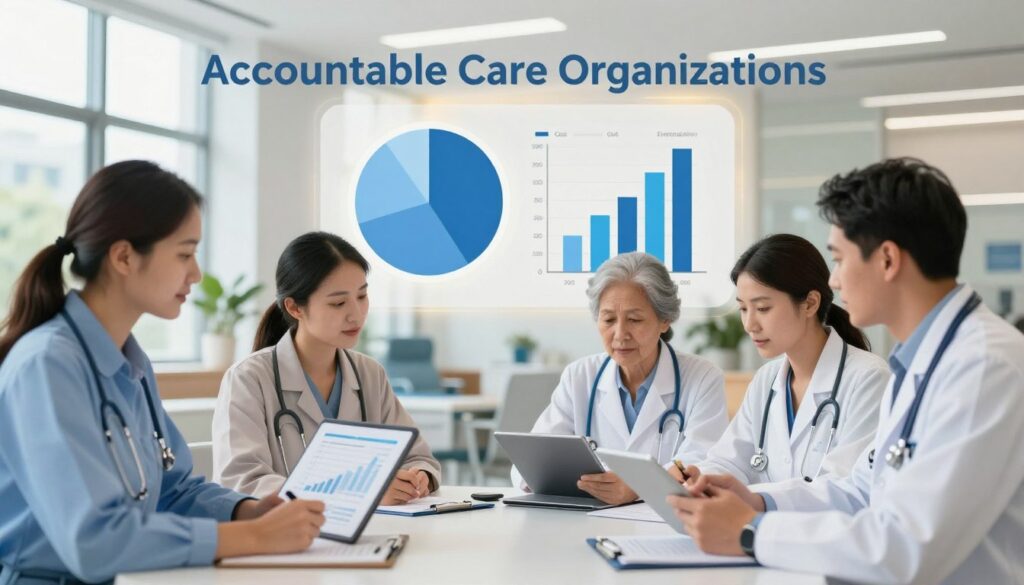
By optimizing resource utilization, ACOs can reduce waste and ensure that resources are directed towards high-value care. This not only leads to cost savings but also improves patient outcomes by ensuring that care is delivered in the most appropriate and effective manner.
Technological Innovations Supporting ACO Success
By embracing technological innovations, ACOs can significantly enhance their ability to manage population health and improve quality metrics. The strategic integration of technology is revolutionizing the way ACOs operate, enabling them to deliver more efficient, patient-centered care.
One of the key technological advancements supporting ACO success is the adoption of telehealth and remote patient monitoring. These technologies allow healthcare providers to remotely monitor patients’ health conditions, reducing the need for hospital visits and improving patient engagement.
Telehealth and Remote Patient Monitoring
Telehealth services enable ACOs to expand their reach and provide care to patients in remote or underserved areas. Remote patient monitoring (RPM) allows for the continuous tracking of patients’ vital signs and health metrics, facilitating early intervention in case of any adverse changes.
Benefits of Telehealth and RPM:
- Enhanced patient engagement and satisfaction
- Reduced hospital readmissions and emergency department visits
- Improved health outcomes through timely interventions
Data Analytics for Predictive Modeling
Data analytics plays a crucial role in ACOs by enabling predictive modeling, which helps in identifying high-risk patients and anticipating potential health issues. This proactive approach allows ACOs to allocate resources more effectively and improve patient outcomes.
| Predictive Modeling Applications | Description | Benefits |
|---|---|---|
| Risk Stratification | Identifying patients at high risk of hospitalization or complications | Targeted interventions to reduce risks |
| Resource Allocation | Optimizing resource distribution based on predicted patient needs | Improved operational efficiency and cost savings |
| Personalized Care Plans | Developing tailored care plans based on patient-specific data and predictions | Enhanced patient satisfaction and health outcomes |
In conclusion, technological innovations such as telehealth, remote patient monitoring, and data analytics for predictive modeling are critical to the success of ACOs. By leveraging these technologies, ACOs can improve population health management, enhance patient care, and achieve better quality metrics.
Future Trends in Accountable Care
As the healthcare landscape continues to evolve, Accountable Care Organizations (ACOs) are poised to play a pivotal role in shaping the future of value-based care. The success of ACOs in improving patient outcomes and reducing healthcare costs has sparked interest in expanding these models beyond traditional Medicare populations.
Expansion to Private Payers
One significant trend is the expansion of ACO models to private payers. This shift is driven by the recognition that ACOs can achieve better health outcomes at lower costs, benefits that are not limited to Medicare beneficiaries. Private insurers are increasingly adopting ACO-like models, encouraging providers to take on more financial risk in exchange for potential savings and quality incentives.
Key aspects of ACO expansion to private payers include:
- Negotiating contracts that align with ACO principles
- Implementing care coordination strategies across different payer populations
- Utilizing data analytics to identify opportunities for improvement
The integration of ACO models with private payers is expected to accelerate the transition towards value-based care across the healthcare system.
Integrating Social Determinants of Health
Another critical trend is the integration of social determinants of health (SDoH) into ACO strategies. Recognizing that factors such as housing, nutrition, and social support significantly impact health outcomes, ACOs are beginning to address these non-medical needs.
| Social Determinant | ACO Strategy | Potential Outcome |
|---|---|---|
| Housing Instability | Partnering with housing agencies to provide stable housing options | Reduced hospital readmissions |
| Food Insecurity | Offering nutrition counseling and food assistance programs | Improved diabetes management |
| Lack of Social Support | Implementing patient support groups and community connections | Enhanced mental health support |
By addressing SDoH, ACOs can further improve patient outcomes and reduce healthcare disparities. This holistic approach to care is expected to become a cornerstone of future ACO initiatives.
Conclusion
Accountable Care Organizations have revolutionized the healthcare landscape by prioritizing patient outcomes and driving healthcare quality improvement. By fostering a patient-centered approach, enhancing care coordination, and leveraging technological innovations, ACOs have significantly improved patient experiences.
The success of ACOs is evident in their ability to reduce unnecessary hospital readmissions, optimize resource utilization, and promote preventive care. As the healthcare industry continues to evolve, ACOs are poised to play a vital role in shaping the future of healthcare delivery.
With their focus on value-based care and population health management, ACOs are well-positioned to address the complex needs of patients and improve overall healthcare quality. As ACO models expand to private payers and incorporate social determinants of health, their impact on patient outcomes and healthcare quality improvement is likely to grow.