
Understanding the intersection of medicine and community wellness is vital for anyone navigating today’s medical landscape. We often hear about individual patient care, but clinical & public health concepts provide the broader framework that keeps our society thriving.
These disciplines work together to bridge the gap between treating a single person and protecting entire populations. By studying these areas, you gain a clearer perspective on how medical decisions impact the world around us.
This guide explores the essential pillars that define modern medicine. Whether you are a student or a curious professional, mastering these clinical & public health concepts will empower you to make informed choices. Let’s dive into the core principles that shape our collective well-being.
Key Takeaways
- Medicine focuses on individual diagnosis, while community efforts target population-wide prevention.
- Effective systems rely on data-driven strategies to manage disease outbreaks.
- Preventive care reduces the long-term burden on medical facilities.
- Policy decisions play a major role in shaping medical outcomes for everyone.
- Collaboration between doctors and community leaders improves overall quality of life.
Defining Clinical & Public Health Concepts
The realms of clinical and public health are interconnected, yet distinct, fields that together form the backbone of healthcare systems. Understanding the nuances of these concepts is essential for healthcare professionals to provide effective care and for individuals to make informed decisions about their health.
Clinical health focuses on the care of individuals, diagnosing and treating illnesses, and managing patient health. In contrast, public health looks at the health of populations, aiming to prevent disease and promote health through organized efforts and informed choices.
The Distinction Between Individual and Population Health
Individual health is concerned with the personal health status of a single person, including their medical history, current health conditions, and personal health behaviors. Healthcare terminology is crucial here, as precise language ensures that healthcare providers understand a patient’s condition and can provide appropriate care.
Population health, on the other hand, examines the health outcomes of groups of people, identifying patterns and determinants of health. This approach helps in developing targeted interventions to improve the health of the entire population.
How Clinical Care and Public Health Intersect
While clinical care and public health have different focuses, they intersect in critical ways. Clinical care informs public health by providing data on individual health outcomes, which can be aggregated to understand population health trends.
Conversely, public health initiatives can influence clinical care by identifying risk factors and promoting preventive measures that clinicians can recommend to their patients. For instance, vaccination programs, a key public health strategy, are often implemented in clinical settings.
Understanding the intersection of clinical care and public health is vital for developing comprehensive healthcare strategies that address both individual and population health needs. By leveraging healthcare terminology effectively, healthcare professionals can communicate more effectively across these different domains.
Foundations of Epidemiology Principles
Epidemiology serves as the backbone of public health, providing critical insights into disease patterns and health determinants. It is a field that systematically studies the distribution and determinants of health-related events, diseases, or health-related characteristics among populations.
The principles of epidemiology are foundational to understanding how health issues emerge and spread within communities. By applying these principles, public health professionals can identify risk factors for diseases and develop targeted interventions.
Measuring Disease Frequency and Distribution
Measuring disease frequency involves quantifying the occurrence of health-related events within a population over a specific period. This is typically done using rates and ratios, such as incidence rates and prevalence rates.
Key measures include:
- Incidence rate: The number of new cases of a disease within a population over a specified time.
- Prevalence rate: The total number of cases of a disease within a population at a given time.
| Measure | Description | Example |
|---|---|---|
| Incidence Rate | Number of new cases over time | 10 new cases per 1,000 people per year |
| Prevalence Rate | Total number of cases at a given time | 50 cases per 1,000 people |
Understanding Determinants of Health
Determinants of health are factors that influence the health status of individuals and populations. These can include genetic, environmental, lifestyle, and socioeconomic factors.
Understanding these determinants is crucial because they can either increase the risk of disease or protect against it. For instance, lifestyle factors such as diet and exercise can significantly impact the risk of developing chronic diseases like diabetes and heart disease.
By examining the determinants of health, epidemiologists can identify potential targets for intervention. This knowledge informs public health strategies aimed at preventing disease and promoting health.
Core Strategies for Health Promotion
Promoting health effectively requires a multifaceted approach that involves various strategies. Health promotion is a critical component of public health, aiming to enhance the overall well-being of individuals and communities.
Effective health promotion involves understanding the complex factors that influence health behaviors and outcomes. It requires a comprehensive approach that incorporates behavioral change models and improves health literacy among the target population.
Behavioral Change Models in Community Settings
Behavioral change models are essential in community settings as they provide a framework for understanding and influencing health behaviors. These models help in designing interventions that are tailored to the specific needs of the community.
Some of the widely used behavioral change models include:
- The Transtheoretical Model (TTM) of behavior change
- The Health Belief Model (HBM)
- The Social Cognitive Theory (SCT)
These models have been successfully applied in various community settings to promote healthy behaviors such as smoking cessation, physical activity, and healthy eating.
| Model | Description | Application |
|---|---|---|
| Transtheoretical Model (TTM) | Describes the process of behavior change as a progression through six stages | Smoking cessation programs |
| Health Belief Model (HBM) | Explains health behavior in terms of beliefs and perceptions about health threats | Vaccination campaigns |
| Social Cognitive Theory (SCT) | Emphasizes the role of observation, imitation, and reinforcement in behavior change | Physical activity promotion |
The Role of Health Literacy in Patient Outcomes
Health literacy is a critical factor in determining patient outcomes. It refers to the ability of individuals to gain access to, understand, and use information in ways that promote and maintain good health.
Improving health literacy can lead to better health outcomes by enabling individuals to make informed decisions about their health. It involves clear communication from healthcare providers and the use of simple, understandable language in health materials.
Clear communication is key to improving health literacy. Healthcare providers should be trained to communicate effectively with patients, taking into account their level of health literacy.
Effective Disease Prevention Tactics
tag and is in American English, adhering to the specified guidelines and requirements.
Implementing Public Health Interventions
Effective implementation of public health interventions is crucial for achieving desired health outcomes at the population level. Public health interventions are designed to address various health issues, ranging from disease prevention to health promotion. The success of these interventions depends on several factors, including cultural sensitivity, community engagement, and the ability to adapt to diverse population needs.
Key Considerations for Effective Interventions
- Understanding the target population’s cultural, social, and economic context
- Engaging community stakeholders in the planning and implementation process
- Ensuring interventions are evidence-based and tailored to the population’s needs
- Monitoring and evaluating the effectiveness of interventions
Designing Programs for Diverse Populations
Designing public health programs for diverse populations requires a nuanced understanding of the unique needs and challenges faced by different communities. This involves:
- Conducting thorough needs assessments to identify health disparities and priorities
- Developing culturally sensitive materials and interventions
- Partnering with community organizations to leverage existing resources and networks

Evaluating the Success of Community Initiatives
Evaluating the success of community initiatives is essential for understanding their impact and identifying areas for improvement. This involves:
- Establishing clear, measurable objectives
- Collecting and analyzing data on key outcomes and indicators
- Using evaluation findings to inform program improvements and scale-up successful initiatives
By focusing on these aspects, public health professionals can design and implement effective interventions that improve health outcomes for diverse populations.
Navigating Clinical Research Methods
The landscape of clinical research is diverse, encompassing various methods that cater to different research questions and objectives. Clinical research is essential for advancing healthcare practices and improving patient outcomes. It involves a systematic investigation into the efficacy and safety of medical interventions, diagnostic procedures, and treatment regimens.
To navigate the complex terrain of clinical research, it’s crucial to understand the different methodologies employed. These methodologies are broadly categorized into observational studies and randomized controlled trials (RCTs), each with its strengths and limitations.
Observational Studies Versus Randomized Controlled Trials
Observational studies involve observing outcomes without intervening. They are useful for studying rare conditions or long-term effects but are prone to biases. On the other hand, RCTs are considered the gold standard in clinical research due to their ability to minimize bias through randomization.
Key differences between observational studies and RCTs include:
- Intervention: RCTs involve an intervention, whereas observational studies do not.
- Bias: RCTs are less prone to bias due to randomization.
- Cost and Duration: RCTs are generally more expensive and longer in duration.
As noted by experts, “Randomized controlled trials provide the most reliable evidence on the efficacy of healthcare interventions” (
The Cochrane Handbook for Systematic Reviews of Interventions
).
Translating Research Findings into Clinical Practice
Translating research findings into clinical practice is a critical step in the research continuum. It involves disseminating research results to healthcare providers and ensuring that these findings are implemented effectively.
Effective translation requires:
- Clear communication of research findings.
- Engagement with healthcare providers and policymakers.
- Development of guidelines and policies based on research evidence.
The process of translation is not straightforward and faces several challenges, including resistance to change and the need for further research to adapt findings to different populations.
Despite these challenges, translating research into practice is crucial for improving patient outcomes and advancing the field of medicine.
The Impact of Healthcare Policy Analysis
Effective healthcare policy analysis is crucial for addressing health disparities and improving healthcare outcomes. By examining the intricacies of healthcare legislation and its effects on clinical practices, policymakers can make informed decisions that enhance the overall quality of care.
Healthcare policy analysis involves a comprehensive review of existing policies, proposed legislation, and their potential impact on various stakeholders, including patients, healthcare providers, and insurance companies. This analysis is vital for identifying areas where policy interventions can significantly improve healthcare delivery.
Legislation’s Influence on Clinical Standards
Legislation plays a pivotal role in shaping clinical standards by setting regulatory frameworks that healthcare providers must follow. For instance, laws related to patient privacy, such as HIPAA, have significantly impacted how patient data is handled and protected.
Key areas where legislation influences clinical standards include:
- Patient safety protocols
- Quality of care metrics
- Access to healthcare services
The table below illustrates some examples of legislation and their impact on clinical standards:
| Legislation | Impact on Clinical Standards |
|---|---|
| HIPAA | Enhanced patient data privacy and security |
| ACA (Affordable Care Act) | Expanded healthcare access to more individuals |
| 21st Century Cures Act | Accelerated approval of new medical treatments |
Advocacy for Equitable Healthcare Access
Advocacy is a critical component in ensuring equitable access to healthcare. By raising awareness about health disparities and pushing for policy changes, advocacy groups can help create a more just healthcare system.
Effective advocacy strategies include:
- Community outreach and education
- Collaboration with policymakers
- Utilizing media to raise awareness
By understanding the impact of healthcare policy analysis and leveraging advocacy, we can work towards a healthcare system that is more equitable and effective for all.
Conducting Community Health Assessments
Community health assessments serve as a foundational element in public health practice, allowing for the identification of local health priorities. These assessments are critical in understanding the health status and needs of a community, which in turn, inform the development of targeted interventions.
Understanding the health needs of a community is not a one-time task; it requires continuous assessment and monitoring. This process involves collecting and analyzing data related to health outcomes, risk factors, and the use of healthcare services within the community.
Identifying Local Health Needs and Priorities
Identifying local health needs and priorities is a crucial step in the community health assessment process. This involves analyzing data on health outcomes, such as disease prevalence, mortality rates, and healthcare access. By understanding these factors, public health professionals can identify areas that require immediate attention and allocate resources effectively.
The process of identifying health needs also involves engaging with the community. This can be achieved through surveys, focus groups, and interviews with community members and stakeholders. By doing so, public health professionals can gain a deeper understanding of the community’s perceptions of their health needs and priorities.
Engaging Stakeholders in Data Collection
Engaging stakeholders in the data collection process is vital for the success of community health assessments. Stakeholders include community members, healthcare providers, local government officials, and other organizations that have a vested interest in the health of the community.
By involving stakeholders, public health professionals can ensure that the data collected is relevant, accurate, and comprehensive. This collaborative approach also fosters a sense of ownership among stakeholders, which can lead to increased support for subsequent health initiatives.
Effective stakeholder engagement can be achieved through various means, including community meetings, surveys, and partnerships with local organizations. By working together, public health professionals and stakeholders can develop a more nuanced understanding of the community’s health needs and priorities.
Essential Healthcare Terminology for Professionals
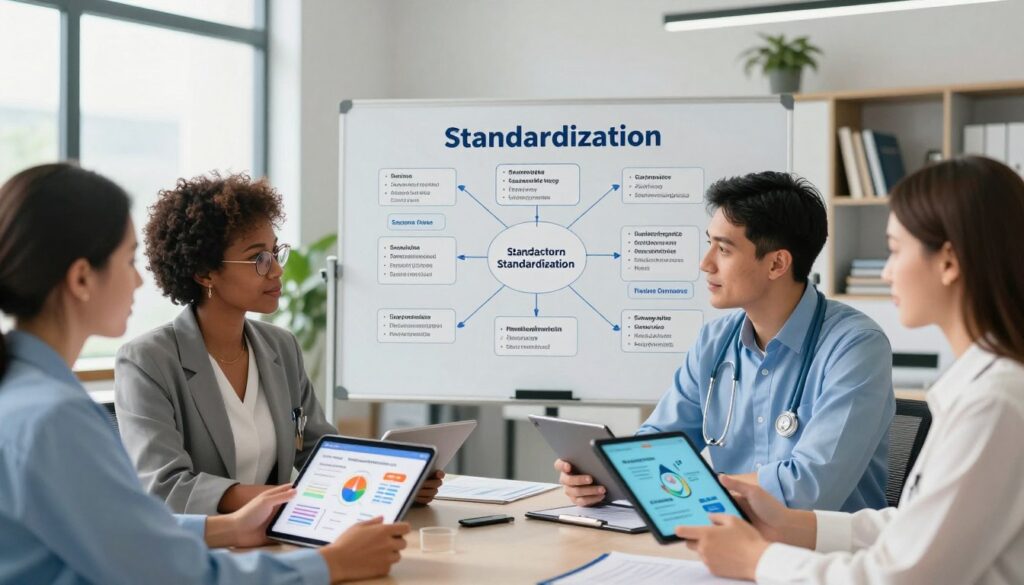
In the healthcare sector, clear and consistent terminology is vital for ensuring that professionals across disciplines communicate effectively. This clarity is fundamental in preventing misunderstandings that could lead to adverse outcomes.
The importance of standardized healthcare terminology cannot be overstated. It facilitates the exchange of accurate information among healthcare providers, researchers, and patients, thereby enhancing the quality of care.
Standardizing Communication Across Disciplines
Standardizing healthcare terminology involves establishing a common language that is understood and used consistently across different healthcare settings. This standardization is crucial for several reasons:
- It ensures that healthcare professionals have a shared understanding of medical concepts and terminology.
- It facilitates the integration of health information systems, enabling seamless data exchange.
- It supports the development of clinical decision support systems that rely on standardized vocabularies.
Reducing Errors Through Shared Language
A shared language in healthcare reduces the likelihood of miscommunication, which is a significant factor in medical errors. By using standardized terminology, healthcare professionals can:
- Minimize misunderstandings related to patient diagnoses and treatments.
- Enhance patient safety by ensuring that all caregivers have access to accurate and consistent information.
- Improve the efficiency of clinical workflows by reducing the time spent clarifying ambiguous terms or concepts.
In conclusion, the adoption of standardized healthcare terminology is a critical step towards achieving high-quality, patient-centered care. It is essential for healthcare professionals to embrace this standardization to ensure effective communication and reduce errors.
Addressing Social Determinants of Health
Addressing the social determinants of health is essential for improving public health and reducing health disparities. Social determinants, including economic stability and environmental factors, significantly influence health outcomes and healthcare access.
Economic stability is a critical factor in healthcare access. Individuals with stable economic conditions are more likely to have health insurance, access preventive care, and manage chronic conditions effectively. Conversely, economic instability can lead to delayed care, increased reliance on emergency services, and poorer health outcomes.
Economic Stability and Healthcare Access
Economic stability affects healthcare access in several ways:
- Health Insurance Coverage: Economic stability often determines whether an individual can afford health insurance, directly impacting their access to healthcare services.
- Preventive Care: Economically stable individuals are more likely to engage in preventive care, such as regular check-ups and screenings, which can prevent or early detect health issues.
- Chronic Disease Management: Stable economic conditions enable individuals to afford medications and treatments necessary for managing chronic diseases.
Environmental Factors Influencing Chronic Disease
Environmental factors, such as air and water quality, housing conditions, and access to green spaces, play a significant role in health outcomes. Exposure to poor environmental conditions can increase the risk of chronic diseases, such as asthma, heart disease, and diabetes.
Key environmental factors include:
- Air Quality: Poor air quality is linked to respiratory diseases and cardiovascular conditions.
- Water Quality: Access to clean water is essential for preventing waterborne diseases.
- Housing Conditions: Safe and secure housing is crucial for physical and mental health.
By understanding and addressing these social determinants, healthcare systems can implement effective health promotion strategies and disease prevention tactics to improve overall public health.
Future Trends in Integrated Health Systems
The integration of technology and healthcare is transforming the way we approach public health interventions and clinical research methods. As we look to the future, it’s clear that integrated health systems will play a crucial role in shaping the healthcare landscape.
One of the key emerging trends in this area is the increasing reliance on technology to improve healthcare delivery. This includes the use of telehealth services, which have become more prevalent in recent years.
Telehealth’s Expanding Role
Telehealth has emerged as a vital component of modern healthcare, enabling patients to access medical services remotely. According to a recent study, telehealth has improved health outcomes by increasing access to care, particularly for underserved populations. “Telehealth has the potential to revolutionize the way we deliver healthcare, making it more accessible and convenient for patients.”
The benefits of telehealth are multifaceted, including reduced healthcare costs and improved patient engagement. By leveraging telehealth technologies, healthcare providers can reach a wider audience and deliver more personalized care.
Big Data and Predictive Analytics
Another significant trend in integrated health systems is the use of big data for predictive analytics. By analyzing large datasets, healthcare professionals can identify patterns and predict patient outcomes more accurately. This enables proactive interventions and more effective disease prevention strategies.
As noted by a healthcare expert,
“The use of big data in healthcare is not just about analyzing existing data; it’s about using that data to predict future health trends and prevent illnesses before they occur.”
The integration of big data and predictive analytics into healthcare is expected to have a profound impact on public health interventions and clinical research methods. By leveraging these technologies, healthcare professionals can develop more targeted and effective interventions.
Conclusion
Understanding clinical and public health concepts is crucial for advancing healthcare systems. By integrating clinical care, public health practice, and healthcare policy, we can create a comprehensive approach to health that benefits individuals and populations.
Effective communication among healthcare professionals relies on standardized healthcare terminology, reducing errors and improving patient outcomes. As we’ve explored, epidemiology principles, health promotion strategies, and disease prevention tactics all play vital roles in maintaining public health.
The future of healthcare depends on our ability to address social determinants of health, leverage technology like telehealth, and analyze big data for predictive analytics. By continuing to learn from and engage with these critical areas, we can work towards a more equitable and effective healthcare system.
As we move forward, it’s essential to prioritize a patient-centered approach, fostering collaboration across disciplines and communities to promote health and well-being for all.